Showing posts with label Unprocessed October. Show all posts

Friday, October 4, 2013

Savory Pancakes and TMI...

     I'm the type of person who has to tell the story of a gift when a person opens it.  People receiving gifts from me have to sit patiently though a long and winding tale of how the gift came to be in their possession.  I regale the receivers of my gifts with harrowing yarns of brave treks to Target surrounded by temptations of every shape and size or long and rambling quests through the jungles of Amazon.  My Mom did it.  I don't know why she did it, but because of her it's how I feel gift giving needs to be done.  The person can't fully appreciate the gift if they don't understand why I chose it for them and how it arrived.  Each gift has a birth story.

Christmas takes a long time.

Squash Blossom and Nasturtium Pancakes

    Food blogging is a little bit like that.  Each recipe has a story.  Sometimes I don't have the time to flesh it out the way I'd like, especially recently with all the upheaval in the living room.  (Maybe someday I'll tell you that arduous tale.) But today I have a moment.  It's raining outside and my boy's bellies are full.  The dishes are piled in the sink.  I've got my apron on and this is why:


     This year, to mix it up a bit in the garden I decided to plant nasturtiums and zucchini.  The poor zucchini has never zuked a single zuke, but it has made tons of blossoms!  Until this year I've never really eaten a good one.  I tried stuffed squash blossoms recipes which were inevitably full of cheese and way too greasy, and decided I liked them chopped up in salad best.  The nasturtiums were to save the kale from insect invaders.  They worked rather well and had the added benefit of being pretty and fragrant.  (I had no idea what a nice scent they had!)

      Besides the unexpected bounty of flowers in my garden, I had also made some homemade cashew milk.  The boys had some friends over this weekend who have special dietary needs and I don't like all the chemicals in the nut milks available in stores.  And anyway, it's super simple:

Cashew Milk
1/2 C raw cashews
2C water, plus more for soaking
1 tsp honey, or to taste (opt)
1/4 tsp salt, or to taste (opt)

Soak raw cashews in water for one hour, then drain and rinse.  Add 2 Cups of water to a blender along with the cashews and blend until liquified.  Strain it if you want and you can add a little honey or salt if you like.  I didn't do any of that for my version.

     I had been toying with the idea of savory pancakes for a while.  There's not much sugar in a pancake except what you pour over it.  They aught to make a great base for a savory breakfast.  To test my theory, I decided to combine all my weird ingredients and see what happened.

Savory Pancakes

Savory Pancakes
1 C Whole wheat flour
1 C White flour
3 t Baking powder
1/2 t Salt
1/4 C Coconut sugar
2 Eggs*
2 T Oil
1 3/4 C Cashew milk
2 Leaves Sage
1/2 tsp Rosemary
1 tsp Thyme
3 or 4 Nasturtium blossoms, chopped
2 Squash blossoms, chopped (pistils and stamens removed)
1/4 C Spring onions for garnish
*You could make this vegan by substituting 1 mashed banana for the eggs.

Combine the dry ingredients, then add the wet ones.  Mix until well incorporated.  Grease a frying pan with butter or oil and preheat.  Spoon batter into pan.  Cook pancakes until done in the middle, flipping once. 

Yield is entirely dependent on how big you make your pancakes.  It usually yields around 12-14 of my small "silver dollar" size pancakes.  Top them with raw, fresh Spring onions and a pat of butter, no syrup necessary!


     If you're wondering about that funky coconut sugar up there especially after I wrote a post about processed sugars for October Unprocessed last year, coconut sugar, as far as I can tell, is one of the least processed sugars there is.  I found this article describing the process of making coconut sugar and Wikipedia backs it up.  I'm sure as soon as it catches on, manufacturers will figure out a way to process the snot out of it, but for now, it seems pretty safe.

Review:
I'm really grateful my husband is open to trying new things.  The kids wouldn't have it.  I think if I had come up with another name for them besides "pancake" they would have been on board.  My husband and I both liked them.  I think next time I'll try a little goat cheese or feta on there, too.

Wednesday, October 31, 2012

Pumpkin Perfect Pancakes!

Seeing as how it's the last day of October and seeing as how I started this month bragging about using only honey for a sweetener all month and seeing as how I've posted nothing using honey for the entire month, I thought I'd submit these delicious pancakes.  Made with Unprocessed October safe ingredients just in case you wanted to start off your last day with something a little sweet.  Or finish it.  Pancakes for dinner is my kind of Halloween!


October Unprocessed Pumpkin Pie Pancakes 
with Maple Syrup Whipped Cream
2C Whole Wheat Flour
3 tsp baking powder
1/2 tsp salt
1/8 tsp mace
1/8 tsp ginger
1/4 tsp cloves
1 tsp cinnamon
1/8 tsp nutmeg
1 Tbs honey
2 eggs
2 Tbs extra virgin olive oil, melted butter, or organic coconut oil
1/2 C pumpkin puree (well drained)
1 C milk (plus more as needed)
3/4 C roughly chopped nuts (walnuts or pecans)
Butter

Whisk together dry ingredients.  Add wet ingredients and whisk well.  Add more milk if necessary.  Cook in a hot pan, greased with butter until pancakes are done.  About 2-3 minutes on each side.


Whipped Cream:
3/4 C whipping cream
1-2 Tbs maple syrup

Add cream and syrup to a bowl and beat on high speed with a mixer until whipped cream forms.  2-3 minutes.


Here are a couple of other recipes I substituted honey into 1:1 for sugar that worked fantastically:
Hot chocolate: 2 C milk, 2 Tbs cocoa, 1 tsp pure organic vanilla, 2-4 Tbs honey
Gluten Free Cornbread

Happy Halloween, everybody!

Friday, October 19, 2012

Home Again Dinner


Last weekend I flew to Southern California to wish a dear, dear friend a Happy Birthday.  How dear?  Well, let's just say, there aren't many people who could persuade me to take a picture like this...


If you're going to rock a duck face, the only way to do it is in fabulous glasses.

I hadn't been back in CA in 4 years.  It was a little surreal to see the old stomping grounds again.  Between seeing old friends and visiting old places there was lots and lots of eating at old favorite restaurants.  Imma pretend it was all 100% unprocessed, m'kay?  When I got back, I needed something to cleanse my palate from all the Indian/Fondu/Italian/Random Stuff I Found in People's Pantries/Disgusting Water Kefir (a story for another day) I'd been pounding for two days.


This is the kind of meal we eat a lot.  Simple, balanced, seasonal.  I threw this together with what I found in the fridge.  If you have the beans and beets made ahead of time, this comes together pretty quickly.  

Roasted Beets with Sautéed Chard, White Beans and Quinoa
2 C cooked white beans
1 large roasted beet, peeled
1 bunch chard, washed and roughly chopped
2 large cloves garlic, pressed
3 C cooked quinoa
1 tsp fresh thyme leaves
1 tsp olive oil
feta or fresh Parmesan cheese (opt)

If you don't have your beans and beets made, go ahead and get that started.  You can quick soak your beans two or three hours ahead by bringing your beans to a boil, turning them off and letting them sit covered for an hour.  When the hour is over, drain the beans, cover with water and add a teaspoon of salt and boil for another hour or until beans are tender.  Or of course you could use canned.  

To roast your beet, preheat the oven to 350°, wrap the beet in foil and put it on a cookie sheet.  Bake until you can pierce easily to the center.  It took about 40 minutes to cook my large beet, but I've had them take up to two hours!

When beets and beans are nearly ready, start quinoa on the stove.  Wash your quinoa with clean water until water runs clear then boil with a little salt for about 15 minutes.  

Once your beet has finished, wait until it cools enough to touch, then peel and slice as desired.

Meanwhile, sauté chard and garlic in olive oil until chard wilts and garlic becomes aromatic.  Add thyme and cook until fragrance releases (between 30 seconds and a minute).  Remove from heat.

You can plate it as I have above, or you can just mix it all up together and top it with cheese.  We don't stand on ceremony much in this house...

Substitutions/Additions:
If I'd had it, I would have added 1/2 C chopped chanterelle (or other) mushrooms to this, but I was slap out.  If you have mushrooms, add them when you add the chard.

You can sub the beans with just about any kind, goat cheese would be a nice sub, too.  And kale or beet greens could easily stand in for chard if you have them.

On an Unprocessed note, Mary Papoulais-Platis posted a very interesting article on Eating Rules for last year's October Unprocessed about olive oil.  Did you know that a lot of the cheap ones aren't even 100% olive oil?!  It pays to know what you're paying for, folks.

Monday, October 1, 2012

Gimme a little Sugah, Baby....


*Excuse me for a minute folks, it's hard to get this saddle on my high horse...*

There now.  That's better.  So!  People ask me from time to time what "Sucanat" is.  It's a sweetener I use made from sugarcane that is one of the "healthier" sugars, if there is such a thing.  Today being the first day of October Unprocessed I thought I'd talk a little about cane sugar.  I think we can agree that when it comes to unprocessed, high fructose corn syrup is right out.  Recently, a few soda companies have gotten wise to the fact that people are trying to eat "real" and have begun marketing sodas "sweetened with real sugar."  To this I say, "It's a start, I guess." 

*My high horse just jumped up on my giant soapbox.*

It takes a lot of processing to make a giant green grass stalk into a tiny white granule.  You can find a detailed description on the EPA's website.  But basically, it goes like this:

1)Sugar cane is harvested.
2) Cane is delivered to the factory.
3) Cane is chewed up in machines.
4) Bulk of the stalk (bagasse) is removed.
5) What remains has water or juice added to it.
6)-? The mixture is repeatedly heated and washed with various bleaching agents, and spun in a centrifuge. The molasses is stripped away.  In the case of white table sugar, one of the extra little ingredients used to bleach it is cow bones.  Tasty.
The final product is a shiny white crystal, perfectly sweet and perfectly clean for just about anything you want to sweeten.  But then, at what cost?

Every bit of anything even remotely healthy from the sugar cane has been stripped away (which is admittedly minimal at best) and the finished product has been steadily bathed in chemicals.  I'm calling this "Processed."

*Banging shoe.  I'm banging my shoe, people!*


 These are all the sugars I could find in the store easily.  
  • White sugar is what we Americans grew up on, of course.  Brown sugar (not pictured) is just refined white sugar with molasses added back to it.
  • Evaporated Cane Juice is less processed, but doesn't retain much of the molasses as you can tell by the color.  
  • Turbinado sugar is sometimes called Demerara and is marketed under the name Sugar in the Raw.  Seriously, I don't know how they get away with this.  It's a giant crystal that's clearly been formed by cooking it!  In fact, unless you are sitting in a field somewhere sucking on a sugar cane, there's nothing raw about any sugar.   
    *Pause for more banging*
All of these products (except white sugar) have had the molasses removed at some point in the cooking process and have had portions returned for a more natural look and flavor.  I'm calling these "Processed."

*I'm looking down my long nose at these sugars.  My high horse is, too.  Although, I think he may be thinking a little bit about how delicious sugar cubes are.*

Sucanat is a brand name of cane sugar.  It is squeezed, cleaned with slaked lime, heated and stirred until granules form.  It is not bleached.  It's then dried and packaged. I have read (on the Internet which is the all-knower of things and the never-producer of falsehoods) that the molasses is removed and added back in for a uniform color.  The manufacturer of Sucanat lists their process on their website, and doesn't mention this, so take that little tidbit with whatever size grain of salt you want.


 Whole cane sugar is pretty much the same darn thing except apparently, they don't strip out the molasses and there may or may not be a "cleaning" process.  This brand has a chart on the back of the package detailing the process: The cane is squeezed, the juice is filtered, heated, and dried, then ground with a sieve.  I'm calling these "Less Processed."

*The heel of my shoe just fell off...*


The thing is, that though these may use varying degrees of processing to produce, there is still a fair amount of energy, chemicals, and general mucking about involved in the production of all of them.  And the calorie count is still the same.  Sugar is sugar.  And sugar isn't really super healthy.  I use Sucanat because I can get it from a bulk bin which means I can buy as little as I want and it is less expensive than getting it off the shelf.  If I happen to run across it, I do occasionally buy whole cane sugar by Rapunzel, though in researching this post, I'm not sure if there is much difference after all.  There are still times when the more natural sugars won't do.  Christmas cookies, for example, don't work as well with sugar full of molasses.

It's quite the conundrum.

The rules for October Unprocessed basically boil down to if you can't conceivably make it at home, you shouldn't buy or eat it.  If I had a field of sugar cane growing out back, I could probably figure out how to make one of the non crystalline granules.  But since I don't and I'm a food blogger and I just want to see what will happen, my solution this month will be:

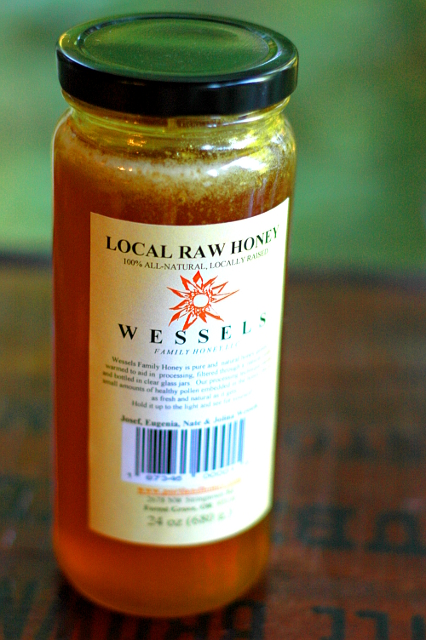
Raw, Local Honey.

Now, here's an article about how most of the honey in the US isn't technically "honey" anymore because it's been so processed.

*My horse just "went" on the soapbox.  I think I heard him say "Oh" first.*
We're all thinking it, horsey.

Thursday, October 20, 2011

I'm a Little Weird...


I like to can.  I just absolutely love to cook up a giant batch of something or other, pour it into jars and pressure cook the snot out of it.  This year, I did three batches of jam, tomatoes, two kinds of pickles, and most recently, mushroom stock.  It is so reassuring to know that I am saving food for my family for a year or more.  And I use it.  When I put stuff in the freezer it usually lives there until it grows fur and I throw it out.  I've been doing the whole October Unprocessed thing this month and I decided it might be a great opportunity to put up some mushroom stock which I've always wanted to do but never got around to.  This was so incredibly simple, I can't believe I haven't done it before.


Mushroom Stock

3 large portobello mushroom caps
1/2  to 1 lb chanterelle mushrooms
3 medium carrots
1 large onion
4 large cloves garlic
4 sprigs thyme
1 sprig sage
4 sprigs rosemary
1 Tbs whole peppercorns
6 Quarts of water
Scant amount salt

Roughly chop mushrooms, onions and carrot.  Put everything else in the pot whole and boil in 3 quarts of water until veggies are soft.  Add remaining water and bring to a boil.  Salt very sparingly. 

In the mean time, prepare your pressure canner and canning jars.

Strain out veggies, catching soup in a large bowl.  Press juice out of the veggies as much as possible using a wooden spoon or a potato masher.  Place in jars and pressure can for 30 minutes.  Yields about 6.5 pints.

Review:

I realized a few dozen soups or so ago that portobello mushrooms add a whole new dimension.  They are so earthy and meaty they knock the socks off regular button mushrooms.  If you don't want them to turn your soup dark, you can remove the gills, but I think it's unnecessary.  I can't wait to use this stock in my next batch of soup.  If you must, you can freeze this, just don't tell me.  It might break my heart...

Speaking of soup and because I'm a little weird, I decided I couldn't bear to trash all those gorgeous mushrooms and veggies.  It took a huge leap of imagination on my part, but I turned them into "Cream" of Mushroom soup!  This whole "food blogger" thing isn't always kind to the ol' waistline, so instead of using cream, I tried non-fat milk.  It wasn't bad at all!


"Cream" of Mushroom Soup

1 batch of left-over mushrooms and veggies, herb stems removed
2 cloves garlic, pressed
2 C non-fat milk
2 C mushroom stock or water
Salt and Pepper

Heat veggies and garlic in water until it boils.  Slowly add in milk, salt, and pepper.  Purée.  Serve with a big hunk of crusty bread and a little fresh or sour cream drizzled on top.  Some fresh thyme would be nice, too if you've got any left.

Review:

Very nice.  Make sure you cook down your garlic well, though.  I didn't and the boys found it too hot.

I've got apple and pear sauces to put up yet this season.  I believe I'll do a more in-depth tutorial on canning if you guys are interested...

Tuesday, October 11, 2011

Accidentally Vegan Banana-Nut Muffins


When we travel, we're usually leaving in the middle of the night or first thing in the morning.  No matter what, nerves and time constraints usually make it difficult for us (OK, for me) to eat a solid meal before we get to the airport.  Besides having a nosh, I love this recipe for cleaning out my fridge.  There's always a bit of fruit or an errant veggie or two hanging around in my fridge plotting to go bad while we're on vacation.  It's super easy to grate a zucchini, a couple of carrots, an apple, a half eaten salmon (you know, whatever you have lying around) into this thing.  I picked this specific recipe because when I found it online I only had a couple of bananas handy.  Most of the online recipes called for 3 or 4, but this one only needed two.  I have added up to 5 bananas to it and it has only served to make it more moist and yummy, but it's really handy for when I've only got a couple that are going the way of the dodo.

I'm not going to lie.  I made this recipe months ago.  It's been languishing in my "to post folder" forever while I busied myself concocting various and sundry recipes using garlic scapes and Chinese Okra.  It's time these humble, yet satisfying muffins made an appearance!  Since I was using these as a "clean out the fridge dump special," I had assumed some items I normally have yet, when I opened the fridge door not only did I not have any eggs, I was out of milk, too!  Fortunately, I had bought some almond milk that week for my son who has cow milk issues.  (I usually buy him goat milk, which would have been fine, but no quite so appetizing.)  I added an extra banana to sub for the egg.  Here is the original recipe, followed by what I did.

Really Easy Banana Nut Bread
2 Bananas
1 Egg, beaten
1 C Sugar
1/4 C Melted butter or margarine
1 1/2 C Flour
1 1/2 tsp Baking powder
(Optional) walnuts or chocolate chips
Mash bananas.  Add beaten egg, sugar, and melted butter.  Stir in dry ingredients until moist.  Place in greased and floured loaf pan.  Bake at 350° for 1 hour.  Slice and serve warm.  (To double, decrease a little sugar.)


Accidentally Vegan Banana-Nut Muffins:
3 Bananas
1 C Sucanat
1/4 C Vegetable oil
1 1/2 C Whole wheat flour
1 1/2 tsp Baking powder
1/4 C Pecans
1 T Almond milk
1/2 C Oatmeal
1/2 Half apple peeled, chopped or grated
Dash cinnamon

Mix and bake following the original directions.  To make muffins, divide the batter into a lined cupcake tin and reduce cooking time to about 15-20 minutes (another reason I love muffins for travel, they cook so quickly!)  Yields about a dozen.


Review:
Could have used another banana for moisture maybe, but pretty great over all.  All my boys loved them and we had a great vacation.  I'm sure it's because we got a good, yummy start!

Wednesday, October 5, 2011

Chinese Okra

I talked in my farmer's market post about one of my favorite finds this year: Chinese okra.   In case you are lucky enough to come across these, I thought I'd share a couple of recipes.

The first thing to do, for both recipes is to trim the top, bottom and ribs off the okra:


This breakfast dish is the one the lady at the farmer's market suggested.  It's a light, fresh, way to start the day.


Chinese Okra Breakfast Scramble
1 medium sized Chinese Okra
1/2 medium onion
2 cloves garlic
2 eggs
olive oil
salt and pepper


Peel the ribs off the okra and chop into 1/2 inch cubes.  Cube the onion, and peel and thinly slice the garlic. Saute in a pan with a little olive oil until the okra is soft and the onion is browned.  Add eggs and scramble.  Season with salt and pepper as desired.  Yields about 3 servings.

It's terrific by itself or turn it up another notch with sweet, in-season tomatoes!

This recipe is very similar, but better suited for other meals.


Chinese Okra Sauté
1 medium Chinese okra
2 ears of corn
2 cloves garlic
1/2 medium onion
4 oz chanterelle or other mushroom
olive oil
salt and pepper
fresh rosemary

Peel ribs off okra and chop into 1/2 inch cubes.  Chop onion and mushrooms.  Cut kernels off corncob and thinly slice garlic. Heat olive oil in a large frying pan and sauté garlic, onion, mushrooms, and okra until okra is softened and the rest of the veggies are slightly browned.  Add corn last and sauté quickly until corn is slightly toasted.  Season as necessary and top with a few fresh rosemary leaves.  Perfect for a side at dinner or all by itself for a light lunch.  Serves 4 as a side, and 1 as a generous main dish.


Review:
A little like zucchini, a little like a green pepper, not at all like okra that grows so well in the south, this little veg is sure to please.  If you find some at your local market, try it out and let me know what you do with it!

Monday, October 3, 2011

A Bit More on Berries

In the spirit of Unprocessed October, I thought I'd go ahead and post the rest of those native berries I mentioned a while ago. What can be less processed than berries you walked outside and picked yourself?

Sambucus caerulea

These are elderberries.  I had never seen these until last week when my forager, David, brought some to the farmer's market.  They are interesting tiny little berries, they have a fairly large seed compared to the flesh around them, so they're a little crunchy, but they taste great.  David suggested drying them and then using them as you would blueberries in pancakes or muffins or on top of oatmeal.  I used these fresh and made them into cough syrup for my son who's come down with a cold.  =( 


These are snowberries:

(Symphoricarpos albus)
 
 They might be my favorite native berry, even though they're inedible.  They are just so beautiful clinging to the bare branches in the wintertime.  My bushes don't produce as prolifically as ones that get more sun.  (And are less covered in English ivy...)  *ahem...*

 
Vaccinium ovatum

These are evergreen huckleberries.  I bought these last Spring and haven't gotten around to planting them yet (eek!) so I don't really know much about these berries.  I assumed they'd be a little larger than this, and probably would have been if I hadn't been such a bad Mommy...

This is a Himalayan blackberry bush...

Rubus armeniacus

If you get a bunch of good berries, this is what happens:


If you get one sour berry, this is what happens:


These will also make you pull that face. 

 
Mahonia nervosa

These are low Oregon grapes.  They are sour as all get out, though the underlying flavor is pleasant in my opinion.  You know, if you can get past the gut clenching sour part...  There is a very similar looking plant called tall Oregon grape, the berries are more oblong, but rest assured they are still sour enough to suck off the insides of your mouth.

 
Gaultheria shallon

And these little darlings are salal berries.  They usually grow right next to the Oregon grape and wouldn't you know it?  They're sweet, a little like a blueberry.  I've heard people make jelly out of them and use the Oregon grape as the pectin, though mine barely produce, so I don't have that luxury...  These pictured here are a little smaller than the norm partly because it's so late in the season, and partly because they get very little sun which is great for the plant, but not so great for the berry production.

 Vaccinium deliciosum

And finally, another native huckleberry, the Cascade huckleberry or Cascade bilberry.  These berries are larger and sweeter than most other huckleberries.  Usually around the size of small blueberries.  David hooked me up with some of these this year, too.  They're great in oatmeal with a little chia and molasses!  The Latin name says it all!

I've said it before and I'll say it again, don't eat anything unless you know for sure what it is.   That said, I hope I have encouraged you to find out what edible natives grow in your area and to search them out.  From prickly pears in California, to blackberries in Washington, to teaberries in North Carolina, to dandelions on lawns everywhere, you may be surprised what you can find to nosh on!
Related Posts Plugin for WordPress, Blogger...